
PUBLISHED 08/24/2026
Archive of Healing Director, David Shorter, and Assistant Director, Hanna Young, reached out to Michelle Wong to discuss her expertise and approaches to healing.
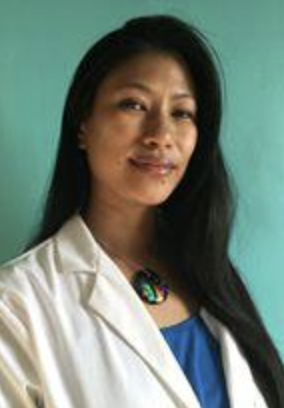
Michelle Wong is a physician of Traditional Chinese Medicine, licensed acupuncturist, herbalist, and is fascinated by all things related to skin. Michelle’s own journey in health began at age four, when she was enlisted to massage her grandmother who had just arrived from the Philippines. The nightly ritual had relieved her of symptoms of emphysema, and she declared the young Michelle gifted with “Hilot” hands. In her practice, Michelle combines cutting edge technology with ancient wisdom, and practical advice for modern day living. She utilizes gentle acupuncture techniques for pain relief, hormonal balance, emotional & facial rejuvenation. As a permaculture designer and ecovillager, she values local herbs and co-leads hikes in Southern California to teach how she uses Chumash medicine in her clinic.
Ms. Wong is also a long time resident of Koreatown, where she has participated in the intentional healing of the community & land. As a member of the LA Ecovillage, she helped found the Beverly Vermont Community Land Trust, saved over 50 affordable housing units, and established community gardens in the most dense & urban neighborhood. The White House Place Learning garden still shelters the sage, toyon as well as nutritious apples, tomatoes and chard that feeds her belly and spirit. With her recent collaboration with Metabolic Studios, the Meandros tower of virgin soil is performing land acupuncture: bringing back the native vegetation from the dormant seeds, and healing our relationship with the soil, water, and wildlife that coexists in Ktown.
AH: Could you begin by telling us about your path toward Traditional Chinese Medicine? Was that something you were aware you wanted to do early on, or was your path circuitous?
MW: Life is a fantastic journey. I certainly have taken the paths less followed, and it has led me back to my truth … over and over again. My grandmother is from the Phillipines and believed I was destined for medicine, since I had a difficult birth as a breech baby and the firstborn to my immigrant parents. When she came to live with us in Michigan, she had emphysema from decades of cigarette smoking, so she employed me as a 5 year old, to massage her chest every night for months with Vaporub. Well, her symptoms disappeared, even in the Michigan winter. She declared that I had Hilot hands – in the tradition of the Indigenous healers of the Visayan islands. Later in school, I was fascinated with plants and healing, and won my local science fair with a project on the Regeneration of Brown Planaria with Aloe Vera. So I explored Western medicine, and took on a summer job at Scripps Clinic, helping with research where I learned to prepare slides of mice kidneys for a doctor of nephrology.
I went on to study Kinesiology at UCLA, and yet my curiosity and a semester abroad at the University of Guadalajara broadened my horizons and I changed my major to Anthropology. I traveled throughout Mexico and Central America, fascinated with the people, the archaeology, their use of plants, and their belief systems – a mix of Catholicism, animism, and ancient cosmologies. I also invested a lot of time in UCLA’s Student Committee for the Arts – where I help program events such as Jazz at the Wadsworth, and an interactive installation at the White Gallery called “Etiquette of the Undercaste”. I realize now how these precious years informed my interests and inspiration in an expanded vision of the healing arts.
After a few years at a corporate job in downtown LA, I forged a career in the nonprofit world. I was an early influence at Coalition to Abolish Slavery & Trafficking, Side Street Projects, and came to reside at the Los Angeles Ecovillage – on the edge of Koreatown & Historic Filipinotown. I learned about permaculture, collective decision-making, and the arduous process of creating permanent affordable housing in a profit-driven society. Here I forged deep friendships, and relationships with people and the plant world. I helped a former partner start a company in Chinese tonic herbs, and delved into this health philosophy. But working in the community garden helped me heal from depression, a broken heart, and I even went on to found the White House Place Learning Garden while volunteering as a board member for the Beverly Vermont Community Land Trust.
Eventually I made a decision to study Eastern Medicine, after my own healing of life-long allergies. On our last day of a powerful homecoming journey with my father in China, he invested a few grand in bundles of mystery herbs and pellets. He was moved by what we learned from the Chinese doctor who took my pulse and looked at my tongue and asked 4 questions between my father and another interpreter. I dutifully cooked up these herbs every day for 3 weeks. And finally noticed how I did not develop sinusitis or eczema in the winter, and in the summer a cat adopted me – and I had none of the severe eye-watering or sneezing that prevented me from being close to pets my whole life.
This inspired me to dive in, and want to study Naturopathy and Eastern Medicine. I travelled to Connecticut, Oregon and Arizona to visit schools. But I realized the best place for me was in my own backyard of Koreatown, where I could work full time for the Bresee Foundation and attend Dongguk Royal University (now Dongguk University Los Angeles) full time.
AH: How was TCM training? Where did you go, for how many years, and what would you advise others considering that path?
MW: TCM training is like learning a new language and culture, and temporarily disbanding the beliefs system you grew up with. I was thoroughly schooled in Western Medicine from my science degree at UCLA, and received care from an ER nurse – my mother, and a western system most of my life. Learning the herbs was easy for me, it was acupuncture and the philosophy of Qi, Jing, Shen, meridians, ministerial fire – all the “invisible” forces that were hard for me to digest. So I sought out another teacher – Shui Yin Lo, who helped me understand “alternative medicine” through the lens of quantum physics and rigorous hypothesis testing and publishing. I also sought the mentorship of Dr. James Adams and Cecilia Garcia who taught me the medicinal native plants in the tradition of Chumash healing. It took me five years to complete my MSOM – it was tougher than my UCLA days, and all while I worked full time. But I am grateful to have a cohort of alumni who also had the grit to complete the longest of master degrees to a charter and unknown paths as health entrepreneurs.
It takes a lot of resolve to get through this training, and to have a solid background in Western medicine. As all of my teachers – especially those from China had to train in both and for many years. I am so fortunate to have received training from top Korean, Japanese and Indigenous and Western/ Integrative practitioners in school and in my continuing education. But for those students who are truly inspired, becoming a practitioner of Eastern Medicine is joining a lineage of healers rooted in nature, empirical evidence, rigorous publishing, and the belief in helping people from all walks of life. Practice as much as possible – I worked in a community clinic for more than a decade, before I started seeing my own patients. And to think like a public health entrepreneur – people are hungry for answers to their health challenges. Ultimately, the health of the community is what supports – or hinders the health of the individual.
AH: We know you’ve been up to some pretty amazing things with Metabolic Studio. Could you explain what “meandros” are and how they relate to healing?
MW: While I believe in local and organic food in nourishing the healthy body (Jing), I believe in the arts as the nourishment for the soul (Shen). Through my permaculture studies, I discovered Metabolic Studios in DTLA through Lauren Bon’s installation “Not a Cornfield” – 30 acres of traditional Hopi red corn planted in a formerly polluted rail yard. The transformation of the space, the events that encouraged us to connect with the landscape, the soil, the history, and the peoples who first cultivated this land inspired me. This land eventually became the Los Angeles State Historic Park. So a few decades later, when I attended one of the first “Meandros” installations at the 18th Street Arts in Santa Monica, I was inspired to bring it to Koreatown. After a year of relationship building, the Los Angeles Ecovillage Institute agreed to bring it to their property – across from the White House Place Learning Garden, and within walking distance to 9 schools. Physically, Meandros is a 10 foot steel tower of Topanga Canyon landslide soil – depaving a parking lot size of asphalt, and transforming it with the native plants and fungi that have laid dormant for millennia. Metaphorically, Meandros participants aim to create a mutual aid network, based on care and transformation of the land, the water and the native plants. And to be a visible connector in our ancient watershed of the Ballona Creek. Each gathering is a healing event where we recommit ourselves to the mystery of the plants and the soil that change throughout the seasons. It’s still early – 5 months into the experiment, so we are getting to know each other and our capabilities. Hopefully we will be able to learn and expand our network, deepening our relationship to our local communities as well.
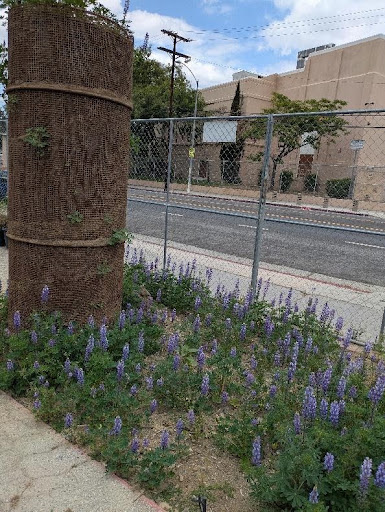
Figure 1: Flowers growing out of the sidewalk
AH: How has it been working on this project in Koreatown? Is there anything particular about that geographic part of LA that makes the work significant?
MW: Koreatown is a uniquely precious neighborhood in LA. Being so close to downtown, and home to distinct groups of immigrants from Bangladesh, Korea, Philippines, Oaxaca, Mexico, El Salvador, etc. – I feel like we are a Mini- UN, with historic buildings, aging infrastructure, many 2nd generation youth like myself, and a future we are redefining for a multi-plural community. After the devastation of the 1992 Uprisings and the Rampart Police department scandals, Koreatown has made the work to heal intentional and sustained through the decades. Leaders and local organizations rose up such as the Pilipino Workers Center, KYCC, Bresee Foundation, the LA Ecovillage, as well as faith leaders, and the LA Department of Behavioral Health (formerly Mental Health), organizing to bring health services, education, and economic development to a community that witnessed hate crimes, distrust, corruption, and property destruction.
Just last month, I witnessed a soccer game that pitted Korea vs. Mexico actually brought so much camaraderie and celebration that drew almost 50k to the streets of Ktown peacefully. And yet, we are subject to perhaps the heaviest ICE surveillance and incursions because of our majority immigrant population. So we organize, and find ways to keep each other safe, with deep appreciation of our shared humanity. The fires and heatwaves of 2025 – 2026 also emphasize the ongoing healing work we need to do on an environmental level with our immediate community. As a long time Ecovillager, and now board member of the Global Ecovillage Network – USA, we model communities for healing in the midst of global energy crisis and economic uncertainty.
AH: What have you been doing with the Altadena Healing Village?
MW: Since the fires in the Altadena and Pacific Palisades, I have teamed up with fellow acupuncturist Christi Mendoza in the co-creation of the Altadena Healing Village, an integrative healing clinic for the fire-impacted. As Healthcare workers for Humanity, we serve communities in crises for physical, mental, and spiritual care for community resilience. We came together in the aftermath of the 2025 fires, and continue the work – standing side by side with Altadenans as they rebuild their homes, providing free care from acupuncture, grief counseling, sound healing, massage, herbs, dance and music in a lovely food forest setting outdoors. We partner with a number of organizations, offering mutual aid and collaboration. Since recovery is a long haul endeavor, we are also learning about sustainability and long-term evolution to help not only Altadena, but other Los Angeles communities affected by stress from the Boyle heights warehouse fire on-going to ICE raids. From my time as the Wellness Center director at Immanuel Presbyterian in K-town, I have been able to use my skills in organizing, as well as my clinical skills towards this endeavor.
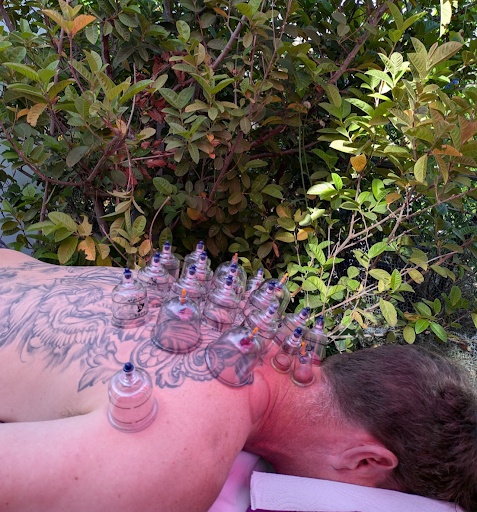
Figure 2: Cupping method
I have also worked with the Department of Behavioral Health, as a member of the Asian Pacific Islander advisory committee. With a small grant, I developed a project called “Sharing Tea, Sharing Hope” to serve free Asian teas “gong fu” style. Complete with small tea cups and gaiwans, respectful deep listening. The goal is to share hospitality without judgement, and referrals to mental health resources in five Asian languages.
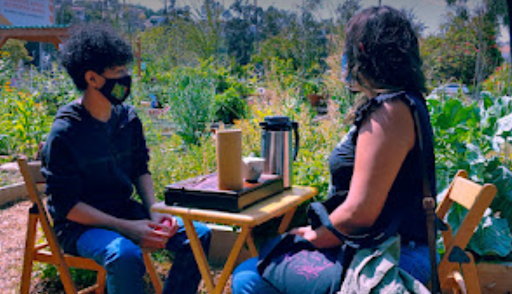
Figure 3: Two people talking in a garden
Currently, my healing work includes expanding access to nutritious food through the LA Community Space Food Bank on the edge of Koreatown and Rampart Village. They have helped me through a health crisis of my own by providing access to organic vegetables rescued from the farmer’s market, which I juiced regularly. I want to pay that forward by helping this young nonprofit stay in Koreatown, and own their building. The vision is to include a rooftop garden and aquaponics, as well as food rescuing and freeze-drying. Our capital campaign is at https://www.zeffy.com/en-US/donation-form/feb861bb-b5e9-4da4-a846-6cc9cc7c2f33
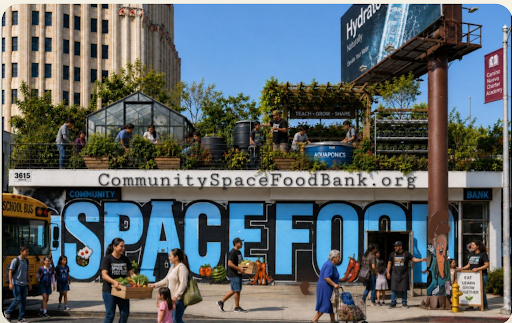
Figure 4: Community
AH: In regard to healing, conceptually, it seems you have a broad range of ways you work, with individuals and communities. What are a few of the most resounding lessons you have learned about healing in contemporary society? I’m sure this will be challenging, so feel free to speak specifically in the three areas of your own practice, Metabolic Studios, and Alta Dena Healing Village, or some other categories.
MW: Since moving to Koreatown, I have known that this path I’ve navigated has been challenging and out of the norm given my family expectations and education. And yet, deep down, I have gained so much skill as a healer. In Chinese medicine, there is a saying
“Superior Doctors Prevent Disease.
Mediocre Doctors Treat Impending Disease.
Inferior Doctors Treat Actual Disease.”
The medical system as we know it - profit based, with costs spiraling out of control as it has become more and more corporatized - is no longer tenable. Deep down we know poor health is not the lack of Humira, or aspirin, or even GLP1. We are surrounded by toxins in our soil, air, water, and airwaves. Healthcare is not just the administering of blood tests and dispensation of pills. Healing comes from the community and in our relationships with each other, and with our environment. Care of the mind, body and spirit as an integrative whole is something acupuncture and herbs can do for individuals. But there is something more precious in witnessing each other in the process of healing as a community. Creating a supportive environment– through healing our environment, gathering, sharing nutritious food, song and stories, we are building more resilience. Resilience to weather the storms, the fire, the politics, Resilience to stress and economic pressure. Resilience to prevent dis-ease. This is the work of the superior doctor, and the work I have learned from living in Koreatown, Los Angeles.